

THE KAYAK
BUYING GUIDE
HOW TO CHOOSE A KAYAK
Enjoying your time on the water starts with selecting the right kayak. Whether you're exploring local lakes, fishing for monsters, or taking on multi-day river adventures, Old Town has a kayak for every adventure.
HOW TO CHOOSE A KAYAK
KAYAKS FOR ANY ACTIVITY
Kayaks are often classified by the type of on-water adventures they were designed for. Some kayak styles are more specialized, like Fishing Kayaks, and some are designed for more general use, like our Recreation & Fitness Kayaks.
Recreation & Fitness
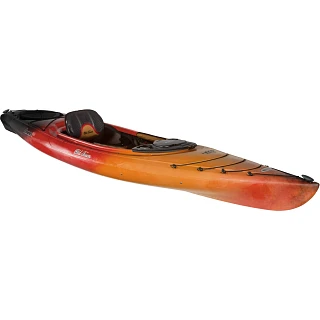
Recreational kayaks are designed to be accessible for most paddlers. They are generally more stable, comfortable, and easy to paddle and transport. Recreational kayaks are great for flat water and slow rivers, not for rapids or longer trips.

Fishing
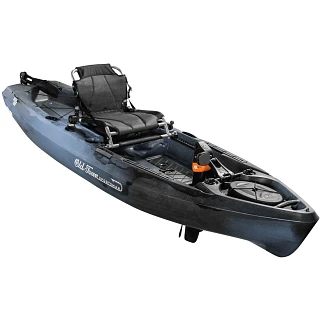
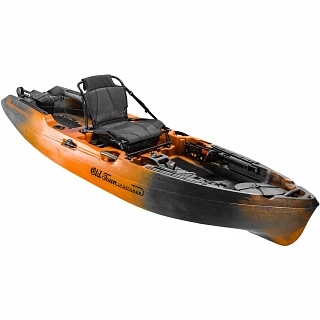
Fishing kayaks are designed with lots of primary stability, making it easy to stand and fish. Many fishing kayaks offer pedal or motorized propulsion, which anglers love for the hands-free control. Deck them out with fish finders, rod holders, and more if you're looking to take your fishing game to the next level.

Day Touring Kayaks
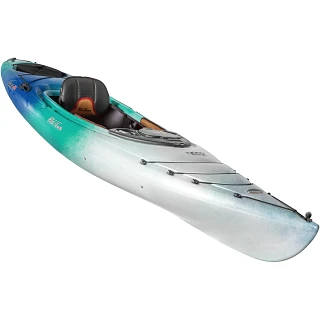
Day touring kayaks are perfect for paddlers who want to go a little farther and faster than their recreational kayak offers. These kayaks are more efficient to paddle thanks to longer, narrower hulls, and offer more storage to keep a full day's worth of gear handy.

HULL STYLE
Sit-on-top or sit-inside? This is one of the most frequently asked questions we hear. The answer largely depends on what kind of kayaking you plan on doing.
Sit-on-Top Kayaks
Sit-On-Top kayaks are easy to get on and off, making them great for casual kayaking and paddlers with mobility issues. If you don't like feeling confined in a small cockpit found on a sit-inside kayak, you may find the sit-on-top to be more comfortable.
You may also want to consider the following:
- Scupper holes make sit-on-top kayaks self-bailing, meaning any water that enters the kayak runs right back out - no pumping required.
- You will get wet on a sit-on-top kayak, which is why they are preferred for warmer weather and water
- If you plan on fishing, you'll likely want the extra stability and space offered by a sit-on-top design

Sit-Inside
Sit-in kayaks offer their own unique advantages. The cockpit provides a closer connection between your thighs, hips, and the boat, allowing for better control of its movements using your body. Many sit-in kayaks feature thigh braces for enhanced control. Additionally, the enclosed cockpit helps keep you warmer, and by adding a skirt, you can stay even drier.

Top Kayaks by Activity & Style
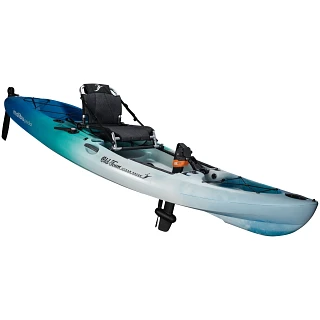
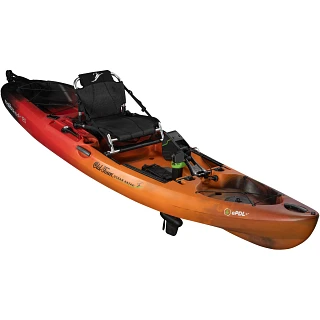
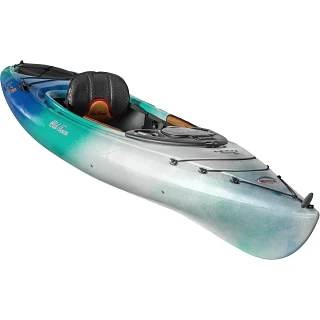
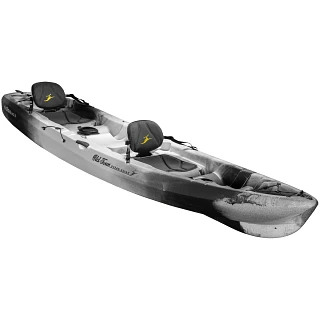
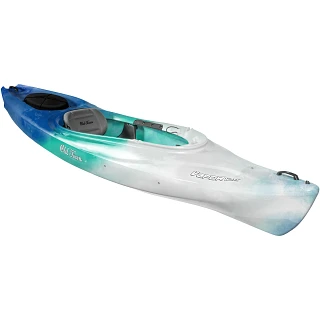
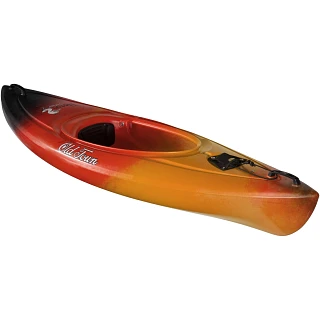
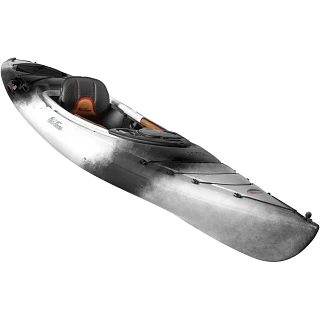
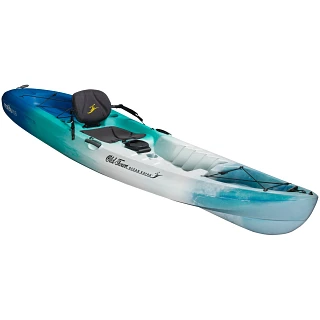
WHAT PROPELS YOU?
Kayaks have been propelled by paddles for thousands of years. These days you have options. Pedal your kayak like a bike, e-bike, and even motor around like a mini boat.
Pedal Kayaks
There’s no better way to get around on the water if you need your hands free for fishing, photography, bird watching, or just sitting back and relaxing. Pedal your kayak like a bike, spinning a propeller under the hull to quickly and efficiently propel your kayak forward and backwards.
Old Town developed our award-winning PDL® Drive in 2016, which is durable, saltwater-safe, low-maintenance, easily removable for transport, and covered by a 5-year limited warranty.

Paddle Kayaks
One paddle blade in front of the other, just like it's always been done. Paddle kayaks are the most common, most affordable, and easiest to transport kayaks. Paddling is an excellent full body workout and doesn't depend on batteries or electronics.
Whether fishing, touring or just looking for a traditional on-the-water experience, there is a paddle kayak for every type of adventurer.

Motorized Kayaks
Is it even a kayak if it has a motor? Yes, it is! Electric motors were originally developed by anglers to help them catch more fish and cover more water, but now you can find motorized kayaks of all types. From the award-winning Sportsman AutoPilot with GPS Spot Lock, to the easy-to-control Sportsman 106 Powered By Minn Kota, take your kayak adventures farther and faster with innovative electronic propulsion.

ePDL+ Kayaks
The patented Old Town ePDL+ Drive is a revolutionary power-assisted pedal drive designed to keep anglers in the chase with the most versatile propulsion options on the market. Easily switch from Manual Pedal mode to Power Assist mode with five levels of motorized assistance.
Kick back and relax when you switch into Cruise Control mode while the battery-powered motor takes over. The backlit LCD display keeps your battery and assistance visible in bright daylight and with polarized sunglasses.

Number of People
Choosing between a solo or tandem kayak depends on how many individuals will be sharing the adventure. Consider the versatility you need. Solo kayaks provide an ideal individual experience allowing customizations to fit one's needs, while tandem kayaks are perfect for one or more adventurers.
Solo
Solo kayaks are designed for individuals who crave independence on the water. Offering unmatched control and maneuverability, solo kayaks allow paddlers to move at their own pace and explore with freedom.
Being lighter and more compact, solo kayaks are easier to transport and handle, making these a popular choice for solo adventurers.

Tandem
Tandem kayaks are all about teamwork and sharing the adventure while pedaling or paddling. They're perfect for duos who want to paddle in sync and enjoy the water together.
With two seats and double the power, tandem kayaks make exploring rivers, lakes, and beyond a true partnership. Whether it is a bonding experience or a test of patience, tandem kayaking always leads to unforgettable memories.

Top Kayaks by Propulsion & Number of Paddlers
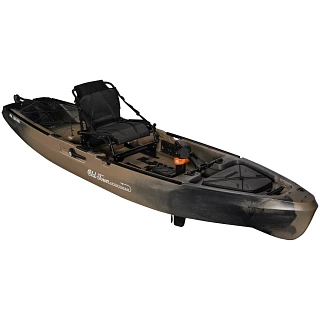
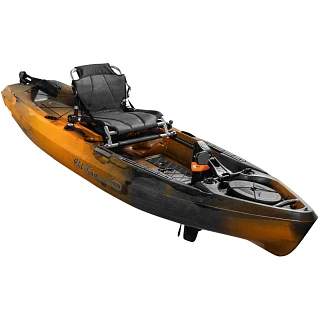
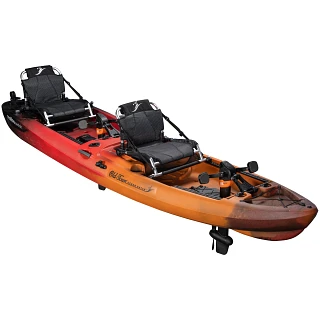
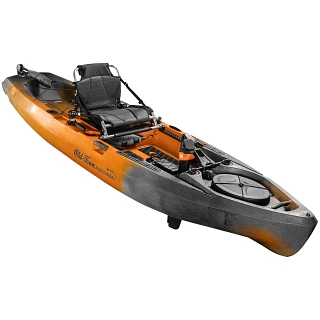

Kayak Selector
Take our simple quiz to find the perfect kayak for you
CONSIDERATIONS
Types of Water
When choosing where to kayak, consider the type of water that matches your skill level and goals.
Small Lakes & Rivers
Kayaking in small lakes and rivers offers an intimate connection with nature, blending tranquility and adventure. Small lakes and rivers are great for beginners and those looking for a peaceful time on the water, as they usually have calm waters.
Small lakes offer a sense of peaceful solitude, while small rivers can add a touch of excitement with mild currents and varying landscapes.

Large Lakes & Rivers
Kayaking on large lakes and rivers can offer more exciting adventures but may have stronger currents or winds to navigate. These bodies of water present a thrilling and often challenging experience, combining vast open waters with the dynamic flow of mighty currents.
Unlike their smaller counterparts, large lakes can feature powerful winds and waves, making paddling a test of skill and endurance. Similarly, large rivers often have stronger currents, unpredictable eddies to navigate, and potential obstacles such as rapids or boat traffic.

Coastal Ocean
Coastal ocean waters are best suited for experienced kayakers as they involve dealing navigating tidal currents, waves, and unpredictable weather conditions. Kayaking these waters offer an exhilarating experience blending the thrill of open water with the allure of coastal exploration can reveal breathtaking views and access to unique marine ecosystems.
Although coastal oceans provide to be more challenging to navigate, the rewards are immense. Imagine spotting dolphins, seals, or exotic sea birds, exploring hidden sea caves, and feeling the invigorating energy of the ocean. It’s an adventure that immerses you in the pure beauty of the natural world.

Offshore
Offshore waters are best suited for experienced kayakers, as they involve exploring vast open waters, offering exciting adventures and an immersive connection to the ocean. Venturing far from the coastline, kayakers often encounter larger swells, powerful currents, and ever-changing weather conditions, demanding both skill and preparation.
The experience however, is equally rewarding. Expansive views of the horizon, encounters with marine life such as whales and sea turtles, unlimited opportunity to fish rare species, and a deep sense of solitude surrounded by the boundless sea all make offshore kayaking well worth the adventure.

Interests
What will your kayak be used for?
Recreation & Fitness
The possibilities are endless for recreational kayaks ranging from paddle, pedal and motorized propulsion types. Consider comfort, features and ease of use to match your needs. Sit-on-top kayaks offer accessibility and freedom, while sit-inside kayaks provide better tracking and protection from the elements.
For a fitness-focused experience consider a pedal kayak for the ultimate full-body workout. The Old Town PDL system engages your legs, providing cardiovascular benefits while building lower-body strength. Paddling with your arms, if desired, can add an upper-body challenge.

Fishing
A great fishing kayak should fit an anglers many needs. Prioritize stability, storage, and a wide and flat hull to ensure steadiness while casting or reeling in fish. Features like built-in rod holders, accessory tracks, and ample storage compartments for tackle boxes and bait are essential.
Adjustable seating and footrests provide comfort during long hours on the water, while motorized, pedal drive or ePDL+ kayaks offer hands-free mobility, keeping you focused on the catch. Always ensure the kayak weight capacity accommodates yourself, gear and any other accessories for fishing.

Touring
Spending long hours out on the water while touring requires a comfortable kayak with the right features to fit you on the journey. When choosing a touring kayak, prioritize stability, speed, and comfort. Look for a design that balances maneuverability with tracking, ensuring it glides straight yet handles turns with ease. Opt for a kayak with ample storage compartments and a higher load capacity to accommodate gear for long trips.

Hunting
For hunting kayaks prioritize stealth and stability. A kayak with a camouflaged design or muted colors will help blend into the environment. Pay close attention to the maximum weight capacity and search for a wide hull which ensures stability for shooting or retrieving game.
A few features to look for will be ample storage essential for carrying hunting gear, adjustable seating and footrests for comfort during long periods of waiting, and accessory tracks for mounting handy accessories you may need.

Top Kayaks by Water Type & Interests
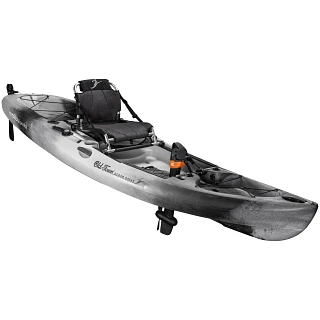
Kayak Features
A solid kayak includes all of the features that you'll need while enjoying the outdoors.
Storage
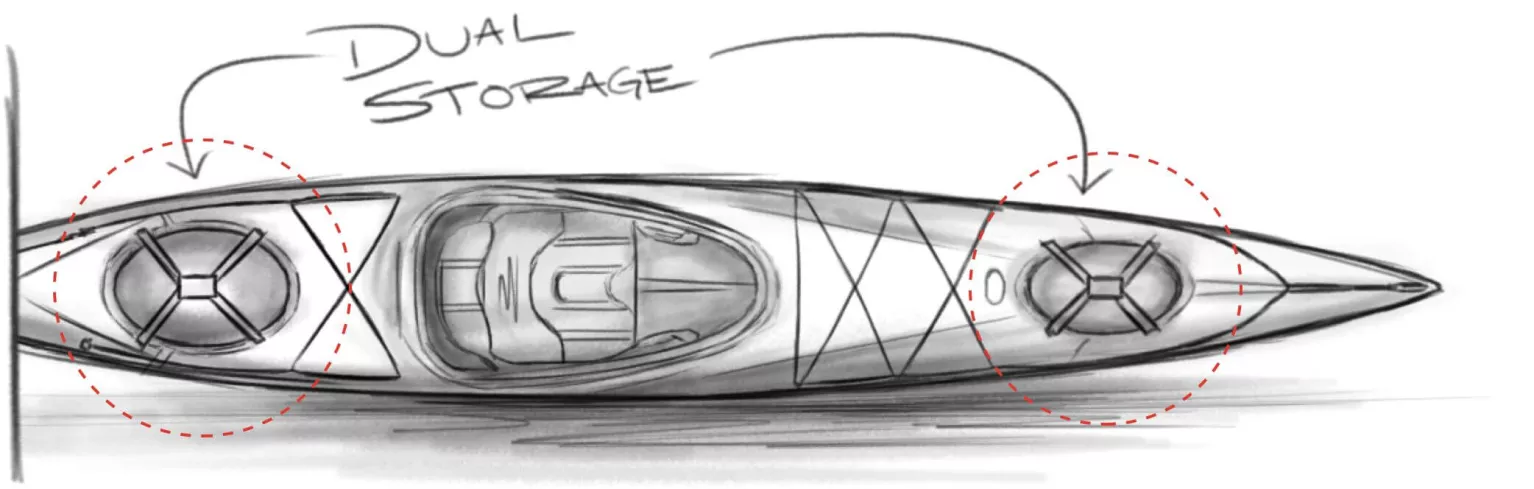
Having ample storage on a kayak is a game-changer for adventure seekers and anglers. It ensures you can bring everything needed for your trip.
Dry storage compartments like hatches and mod pods are sealed and watertight which is great for valuables like phones or keys. Some models even offer under-seat storage for easy access to personal items.
Tankwells, open storage areas usually at the stern, are ideal for larger gear like tackle boxes, coolers, or crates, and often include bungee cords to secure your load.

Seating
Kayak seats vary in design, comfort, and adjustability to suit different needs. Here's a breakdown of their differences:
- Contoured Seating: Provides ergonomic support by conforming to the paddler’s body featuring molded padding, lumbar support, and cushioning to reduce pressure points.
- Comfort Flex: Great for casual outings, these seats offer moderate padding and adjustable back support.
- Active Comfort System 2.0 (ACS2): Exclusive to Old Town, offering top-tier premium padding, under-leg support, and flow-through ventilation.
- Element Seating System: Built for fishing with breathable quick-drying material, an anodized aluminum frame, and adjustable backrest support. The Beach Seat is its lighter, recreational version.

Rudder or Skeg
A rudder or skeg is vital for improving a kayak's tracking and stability in more challenging conditions. Both help keep the kayak moving in a straight line, preventing it from being affected by wind, currents, or waves that can push it off course.
Rudders offer greater steering control which is ideal for open water and strong winds. These are usually foot-pedal operated.
Skegs are simpler than a rudder. These are fixed blades that add stability in rough or crosswind conditions and are less likely to malfunction.

Accessory Tracks
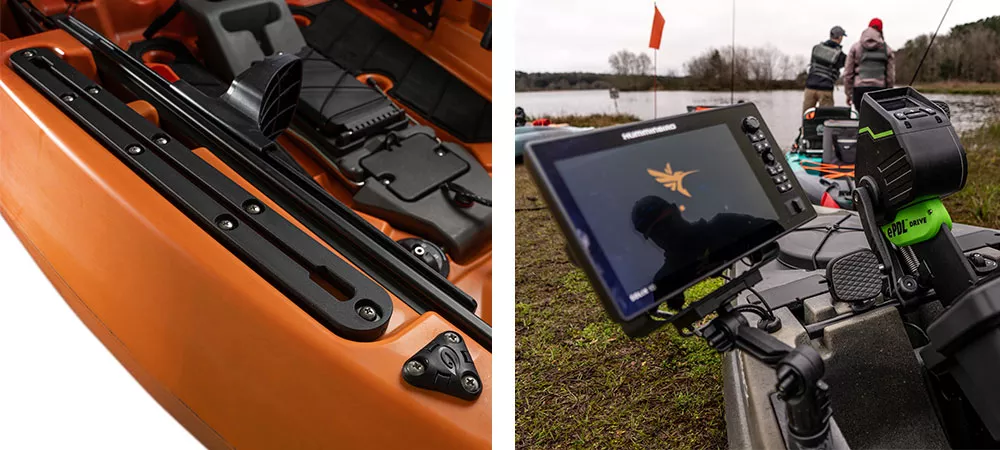
Accessory tracks are versatile mounting systems that allow you to attach and customize various accessories for convenience and functionality. These tracks are typically rails built into the kayak's design, usually along the sides, at the stern or in front of the seat.
With accessory tracks items like rod holders, fish finders, cupholders, cameras, or GPS devices can be mounted. These are designed to be adjustable so accessories can slide to your preferred position without the need for permanent installation or drilling.
Fishing Ready
You'll want to be where the fish are and be ready. When choosing a kayak for fishing some of these specific features can enhance your experience:
- Rod Holders: Built-in or adjustable holders to secure fishing rods while paddling or waiting for a catch.
- Thru-Hull Wiring: Necessary for running electrical wires or cables through the kayak hull.
- Accessory Tracks: Rails for attaching accessories like fish finders, GPS, or action cameras.
- Stern & Bow Mounts: Designed to secure equipment such as a trolling motor to either the kayak stern or bow.
- Standing Platform: Non-slip surfaces that allow anglers to stand for better casting and visibility.
- Anchor & Rudder Systems: A built-in anchor or anchor trolley to keep the kayak stationary in the water.

Kayak Dimensions
Kayak dimensions directly impact performance and practicality. Consider length, width, weight, and capacity to find the right fit for your adventure.
Length
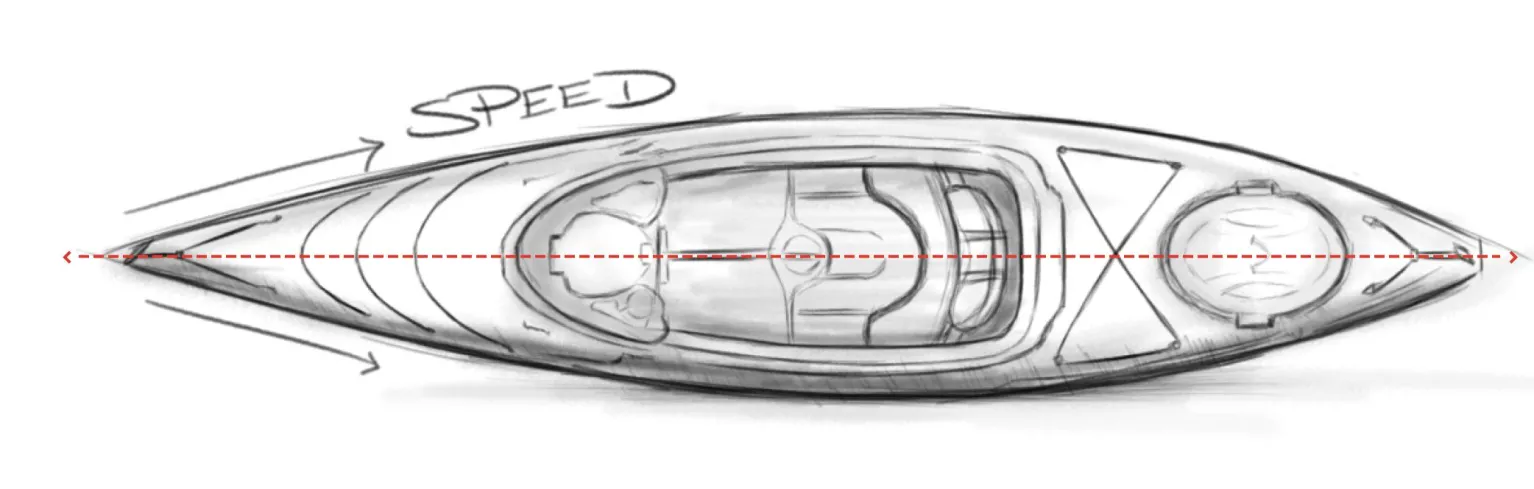
Length affects speed and tracking—longer kayaks are faster and better for straight paths, while shorter ones are more maneuverable for tight spaces.
Shorter kayaks are easier to turn and maneuver.
Longer models tend to be faster, track better, and cut through wind and water more efficiently.
Width
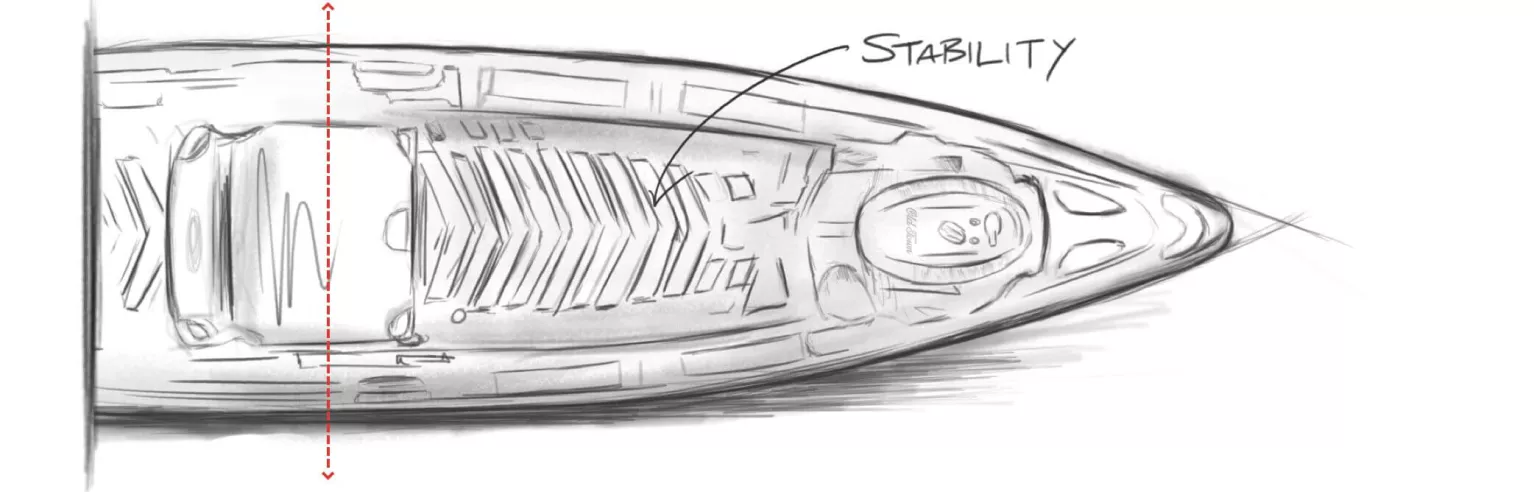
Width impacts stability; wider kayaks provide a steadier ride, ideal for beginners or fishing, while narrower models enhance speed and efficiency.
Narrow hulls slice through the water and track more effectively. Wider hulls are much more stable which is better for fishing and standing.
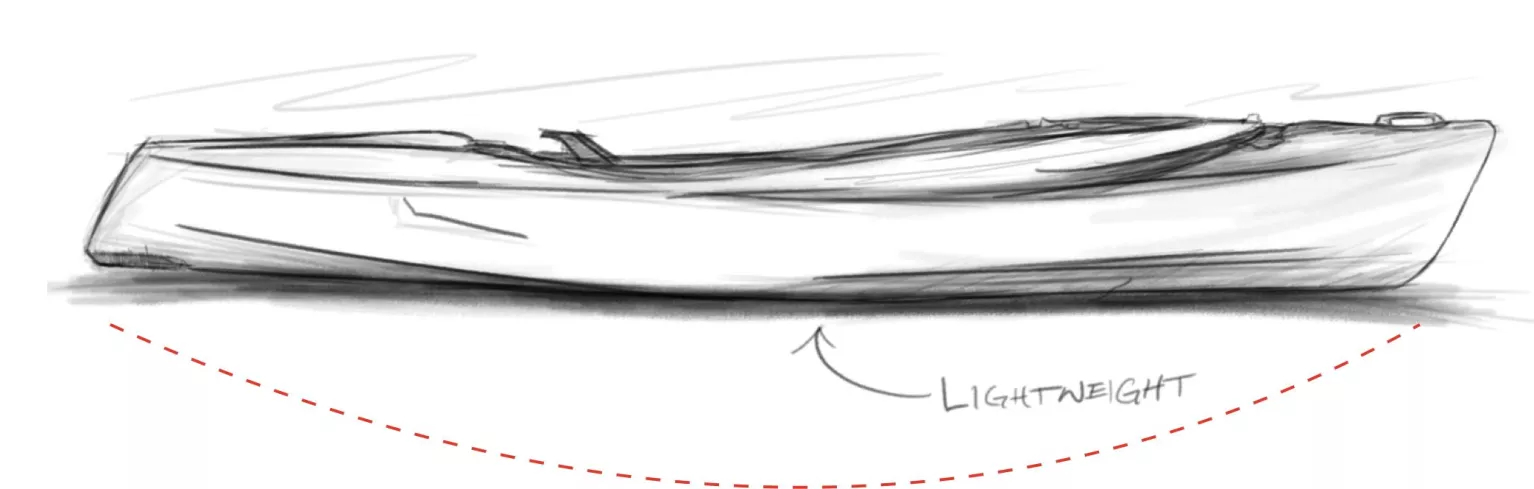
Weight
Weight determines ease of transport, so factor in how you plan to carry or load your kayak.
Lightweight kayaks are easier to transport, portage and store, while heavier models have added material for increased durability and strength.
Maximum Capacity
It is important to consider your weight and build, as well as the amount of cargo you think you’ll need room for. Always check the maximum capacity to ensure it accommodates your weight and any gear you're bringing along.
ANATOMY OF A KAYAK
Kayak Basics
Mastering these essential kayak basics set the foundation for a fun and confident time on the water.
Kayak Parts & Terms
Understanding the different components of a kayak is key, as each design is tailored to specific activities and styles. Below are essential terms and parts that are common across most kayaks:
- Bow: Front of the kayak
- Stern: Back of the kayak
- Port: Left side of kayak
- Starboard: Right side of kayak
- Deck: Top of the kayak visible above water
- Hull: Bottom of the kayak below the water
- Rocker: Curvature of the hull from bow to stern
- Chine: Area where the bottom of hull and sides meet
- Keel: Runs along bottom of the hull from bow to stern
- Cockpit: Area to sit in and command the kayak
- Bulkheads: Walls inside hull or hatch for improved buoyancy

Materials
Kayak materials impact durability, weight, and performance on the water. Old town kayaks are primarily constructed of two types of material— Single Layer Polyethylene and Three Layer Polyethylene.
Single-layer polyethylene: The hull is made from a single, solid sheet of polyethylene plastic. This is molded into the hull shape, creating a durable and impact-resistant kayak that is relatively lightweight.
Three-layer polyethylene: The hull is made from three distinct layers of polyethylene plastic. The inner layer is a foam core enhancing buoyancy, middle layer provides rigidity and strength, and the outer layer offers impact resistance and durability.
Essential Accessories
Having the right essentials ensures safety, comfort, and efficiency. With these essentials you'll be prepared for a smooth and enjoyable kayaking trip:
- Paddles: Essential for maneuverability, choose one to match your kayak and paddling style
- Life Jacket: A critical safety item that keeps you afloat during unexpected situations
- Anchor: Useful for stability when fishing or resting in calm waters
- Scupper Plugs: Keeps water out of the cockpit and provides a drier ride
- Transportation: Necessary to get your boat to and from the water safely while traveling

READY TO BROWSE?

BOATS THAT LAST A LIFETIME

Every hull, gunwale, and seat undergoes meticulous design to uphold our legacy of crafting the best canoes and kayaks in the watercraft industry—all backed by a lifetime hull warranty.

Kayak Selector
Find the perfect kayak for you by taking our interactive quiz.

Find a Dealer
Search for kayaks near you with our Dealer Locator.